

News Details
30
2026
-
01
Automatic Door Sensors for Warehouses: Types, Benefits, and How to Choose the Right One
Discover the best automatic door sensors for warehouses, including microwave, infrared, ultrasonic, radar, and safety light curtain systems. Learn how each sensor works, key benefits, and how to choose the right solution to improve warehouse safety, effic
Warehouse environments depend heavily on fast, safe, and reliable access control. Every second counts—whether it’s forklifts moving goods, staff passing through, or trucks entering loading bays.
That’s where automatic door sensors for warehouses play a critical role. They ensure doors open at the right time, close securely, and reduce accidents, energy loss, and operational delays.
This guide breaks down the main sensor types, how they work, and how to choose the right one for industrial warehouse applications.
What Are Automatic Door Sensors?
Automatic door sensors are devices that detect movement, presence, or objects and trigger door operation automatically.
In warehouse systems, they are commonly integrated with:
Sliding industrial doors
High-speed roll-up doors
Sectional overhead doors
Loading dock doors
Access control gates
Their main job is to ensure doors respond intelligently to real-world activity.
Why Warehouses Need Automatic Door Sensors
Warehouses are high-traffic, high-risk environments. Manual door operation creates inefficiencies and safety hazards.
Key reasons sensors are essential:
Faster logistics flow
Reduced human operation errors
Improved forklift safety
Better temperature control (cold storage)
Reduced energy loss
Controlled access security
In modern smart warehouses, sensors are no longer optional—they are infrastructure.
Main Types of Warehouse Door Sensors
1. Microwave Motion Sensors
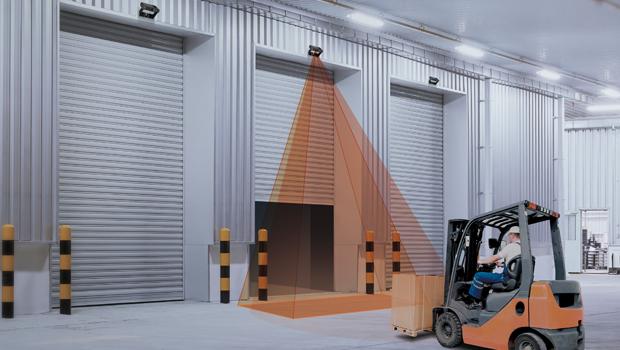
Microwave sensors detect motion using Doppler radar technology.
How they work:
They emit microwave signals and detect frequency changes caused by movement.
Advantages:
Long detection range
Works through some non-metallic materials
Fast response time
Ideal for forklifts and vehicles
Best use cases:
Warehouse entrances
Loading docks
High-speed doors
2. Infrared (IR) Presence Sensors
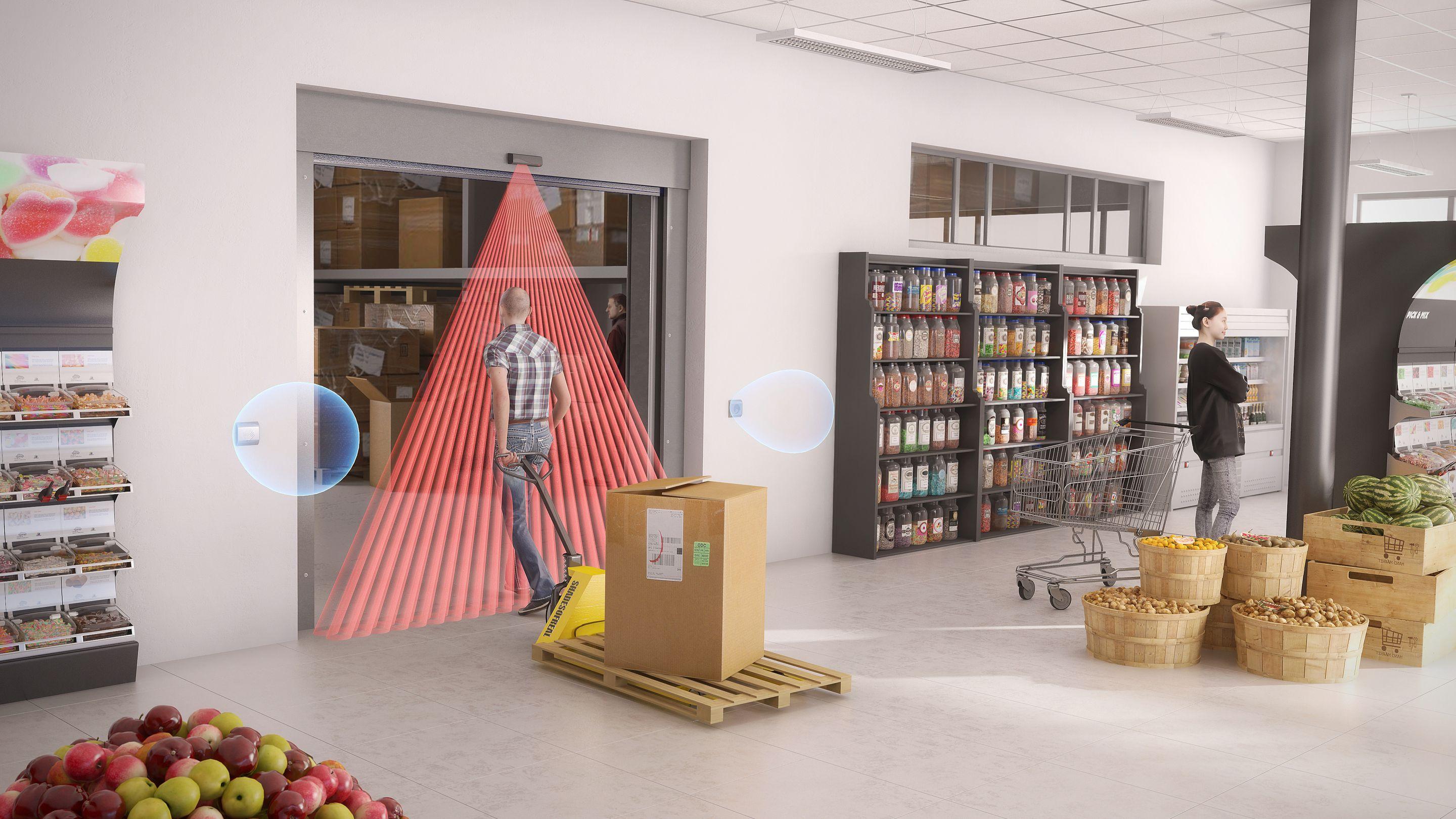
Infrared sensors use light beams to detect presence or interruption.
Types:
Active infrared beam sensors
Safety light curtains
Advantages:
High safety accuracy
Detects stationary objects
Reliable in controlled environments
Best use cases:
Safety edges on doors
Preventing door closure on people or forklifts
Restricted access zones
3. Ultrasonic Sensors
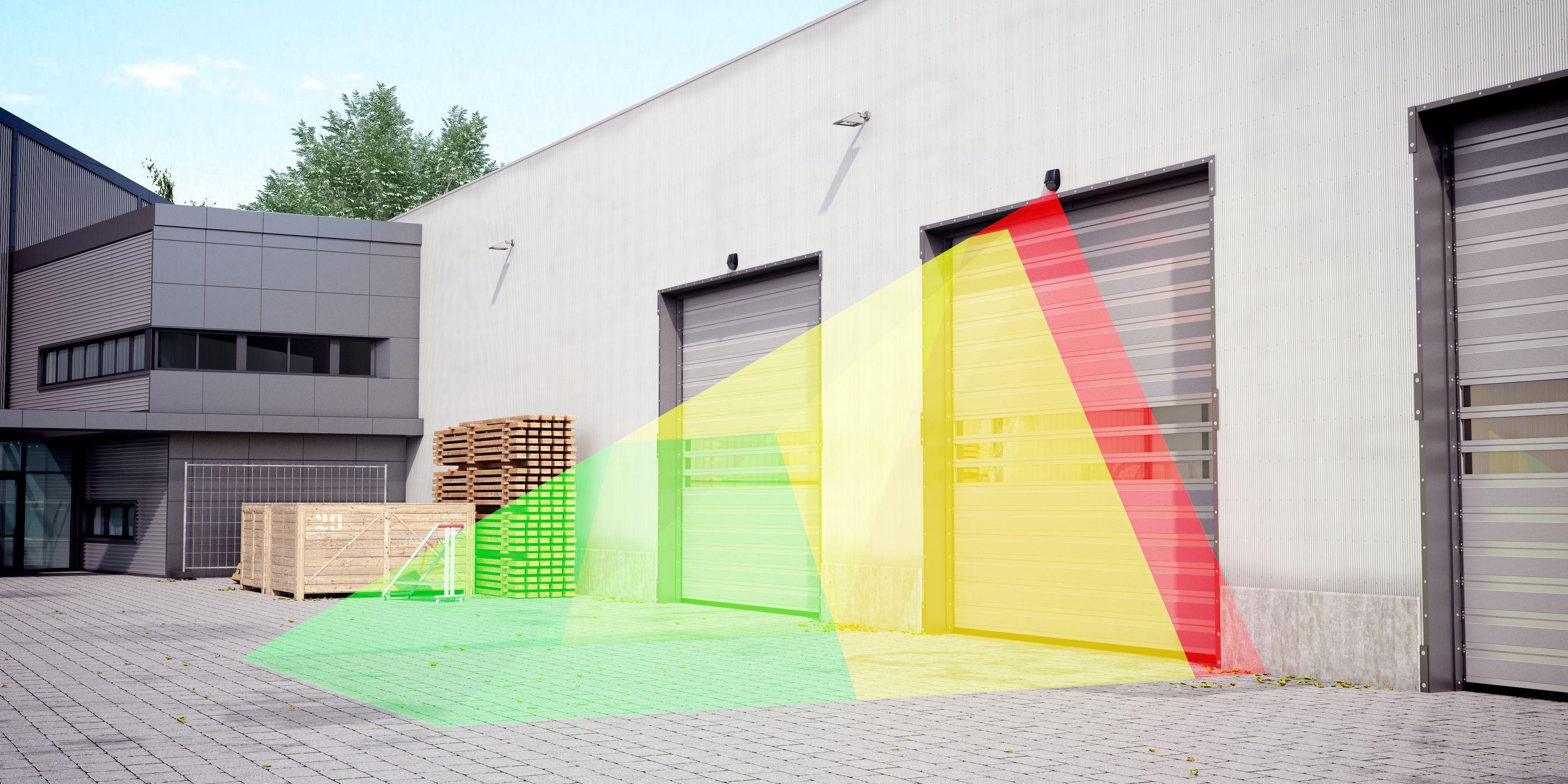
Ultrasonic sensors use sound waves to detect objects and measure distance.
Advantages:
Works well in dusty environments
Good for presence detection
Stable in low-light conditions
Limitations:
Slightly slower than microwave sensors
Can be affected by airflow and temperature changes
4. Radar / High-Frequency Sensors
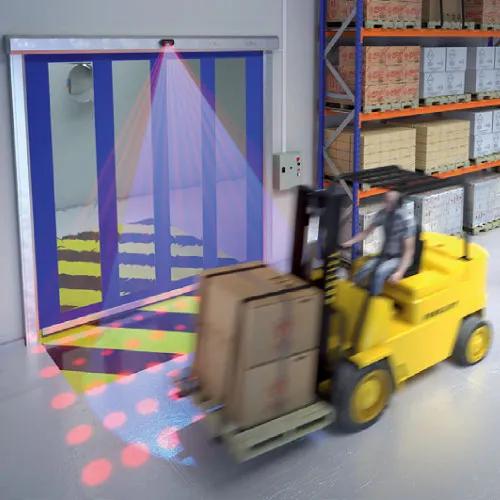
Radar sensors (often 24GHz or higher) are widely used in modern industrial automation.
Advantages:
Very accurate motion detection
Adjustable detection zones
Works in harsh environments
Ideal for fast doors
Best for:
Smart warehouses
Logistics centers
Automated loading systems
5. Safety Light Curtains
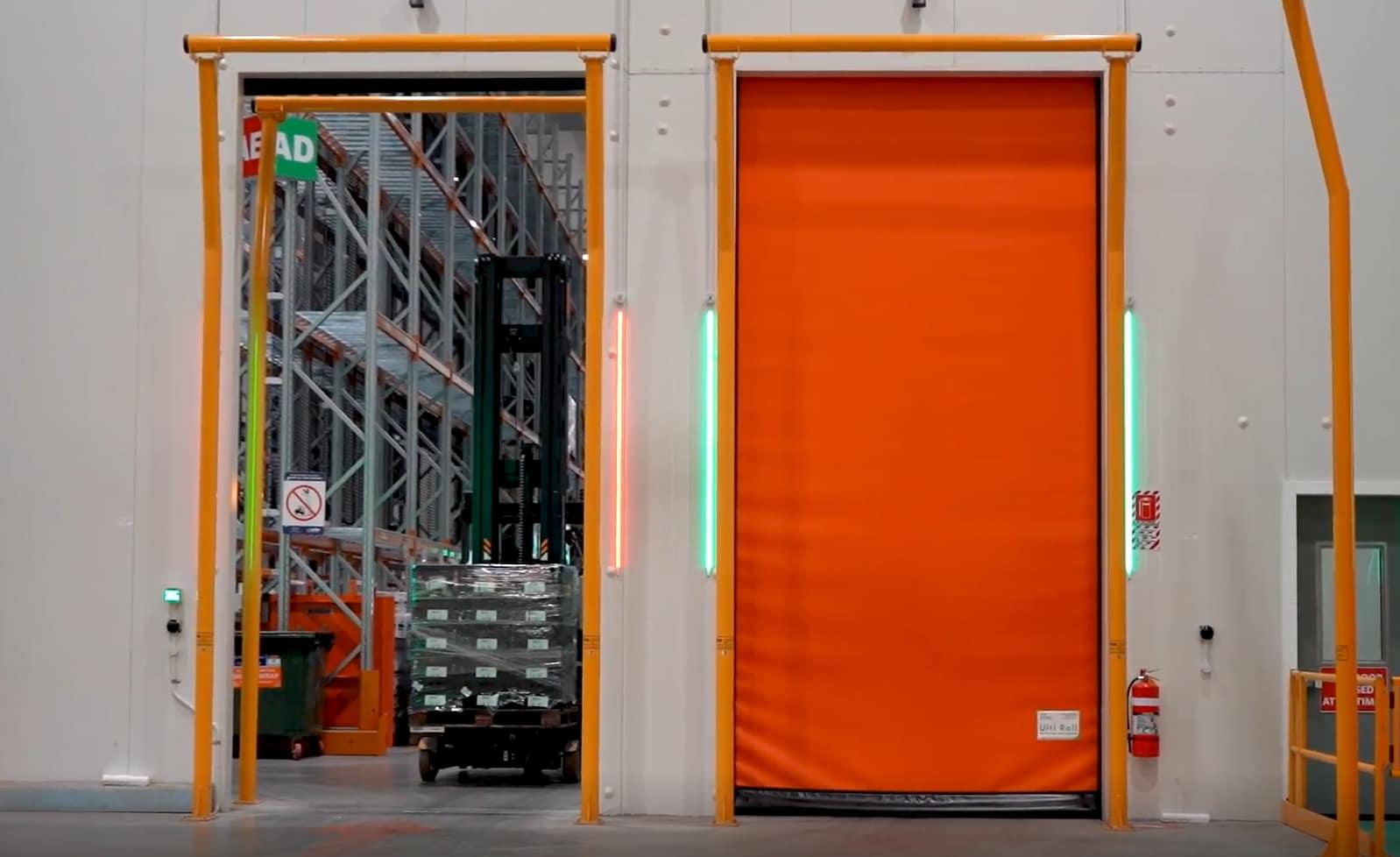
Light curtains create an invisible safety barrier using multiple infrared beams.
Advantages:
Highest safety level
Detects any intrusion instantly
Prevents accidents with moving doors
Best use cases:
Heavy industrial doors
High-speed roll-up doors
Human safety zones
Key Factors When Choosing Warehouse Door Sensors
1. Traffic Type
Forklifts → microwave or radar sensors
Pedestrians → infrared or light curtains
Mixed traffic → combined sensor systems
2. Environment Conditions
Dusty warehouses → ultrasonic or radar
Cold storage → infrared stability required
Outdoor loading docks → weatherproof radar/microwave
3. Door Type
| Door Type | Recommended Sensor |
|---|---|
| Sliding door | Microwave / radar |
| High-speed roll-up door | Radar + safety light curtain |
| Sectional door | Infrared beam |
| Loading dock door | Microwave radar |
4. Detection Speed
High-speed doors require:
Fast trigger response (<100ms)
Wide detection zone control
Anti-interference design
Radar sensors are typically the best here.
5. Safety Requirements
If human safety is critical:
Always use safety light curtains
Combine with motion sensors for redundancy
Common Installation Mistakes
1. Wrong mounting height
Too low → blind zones
Too high → missed detection
2. Metal interference
Steel racks and doors can reflect signals and cause false triggers.
3. Poor sensor positioning
Sensors facing forklift lanes incorrectly cause unstable triggering.
4. Mixing incompatible systems
Not all sensors integrate well with all control boards.
Smart Warehouse Trend: Sensor Fusion Systems
Modern warehouses increasingly use:
Microwave + infrared combined systems
Radar + safety curtain integration
IoT-connected sensor networks
This improves:
Accuracy
Safety redundancy
Automation intelligence
Best Practices for Warehouse Door Sensor Systems
Use dual-sensor setups for critical entrances
Separate motion detection and safety protection roles
Regular calibration and cleaning
Use industrial-grade IP65+ rated sensors
Ensure proper grounding and shielding
Conclusion
Automatic door sensors are essential components of modern warehouse automation systems. The right sensor choice depends on traffic type, environment, door speed, and safety requirements.
In most industrial warehouses:
Radar/microwave sensors handle motion detection
Infrared beams or light curtains handle safety protection
A well-designed system improves not only efficiency but also workplace safety and energy management—making it a key investment in warehouse modernization.


Contact Information
Add: No.991 Xingxiu Road,Taiwanese Investment Zone, Quanzhou, Fujian Province,P.R.China
Tel: +86 136 1606 8720
E-mail: [email protected]
friendly links: GatePartsHub gate operator accessories